
Building the tourism site before the contract, to answer the only real objection
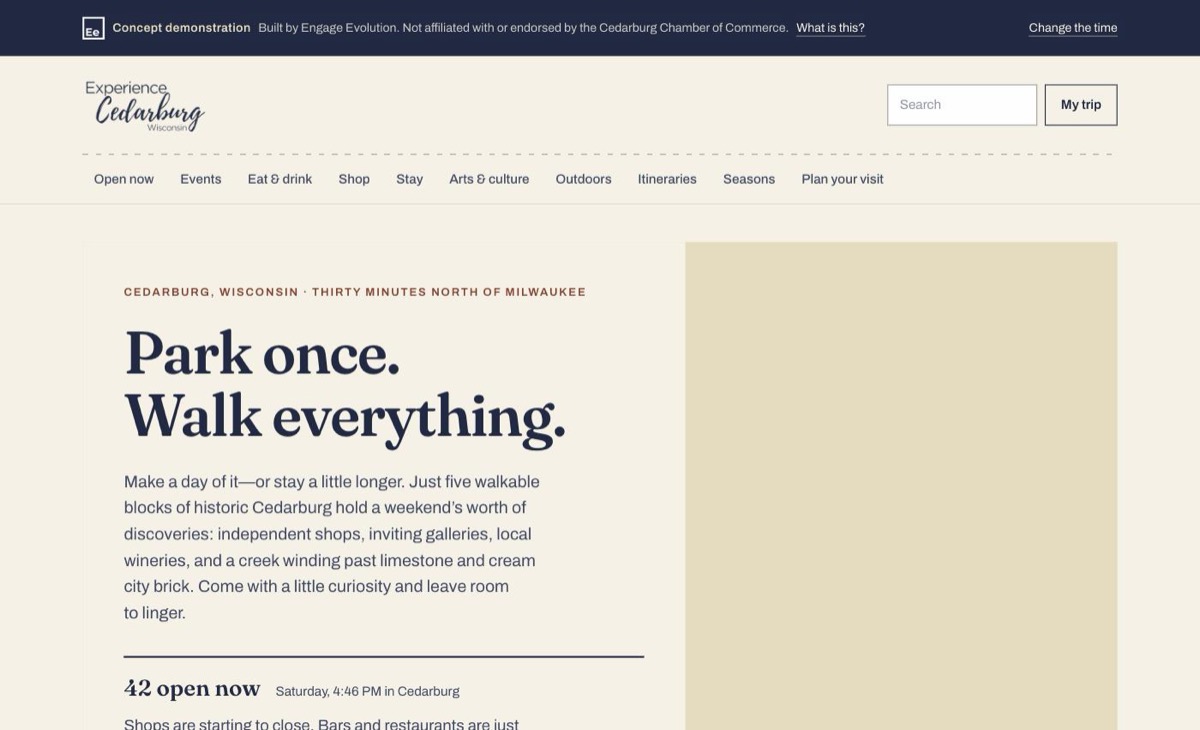
A spec build: a working destination-marketing platform produced during an RFP response, because a missing tourism portfolio is best answered with a working site.
- Next.js and React Server Components
- Supabase data modeling
- Map and itinerary features
- RFP response
A spec build. This was produced as part of an RFP response and is not a contracted engagement. It is published here because the work is real and the reasoning is worth showing, not as a claim of a client relationship.
The situation
The Cedarburg Chamber of Commerce put a tourism website out to bid. The obvious objection to our response was a thin tourism portfolio — plenty of marketing-platform work, not much destination marketing.
A deck does not answer that objection. A working site does.
The decision
The original plan was a six-screen prototype, enough to illustrate a direction. We changed posture: build it substantially complete instead. The Chamber had no hard deadline beyond the proposal date, and something they could actually adopt is worth more than something that merely demonstrates taste.
What we built
Next.js 16 with the App Router and React Server Components, Supabase for Postgres and admin authentication, Tailwind 4, deployed on Vercel.
Maps use MapLibre GL with OpenStreetMap tiles rather than Google Maps. That is a deliberate procurement decision as much as a technical one: no API key, no per-load billing, and no vendor account the Chamber would have to create before a demo could even render.
The data model is six tables and deliberately small.
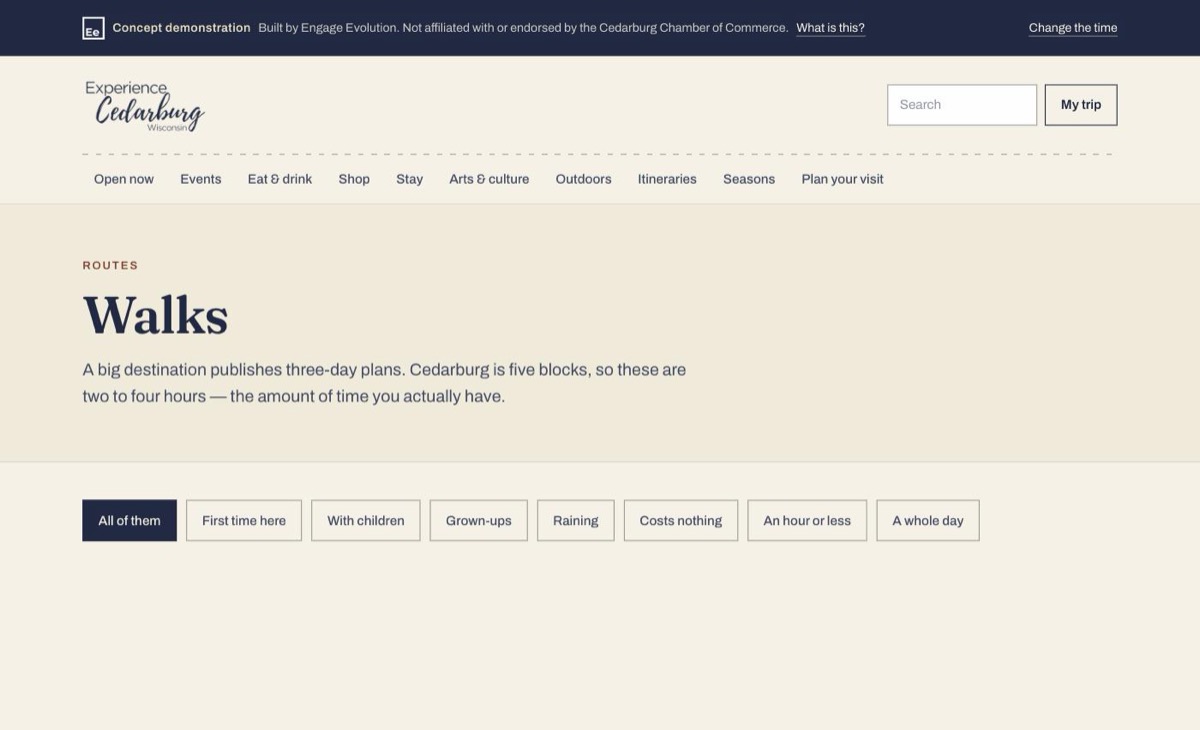
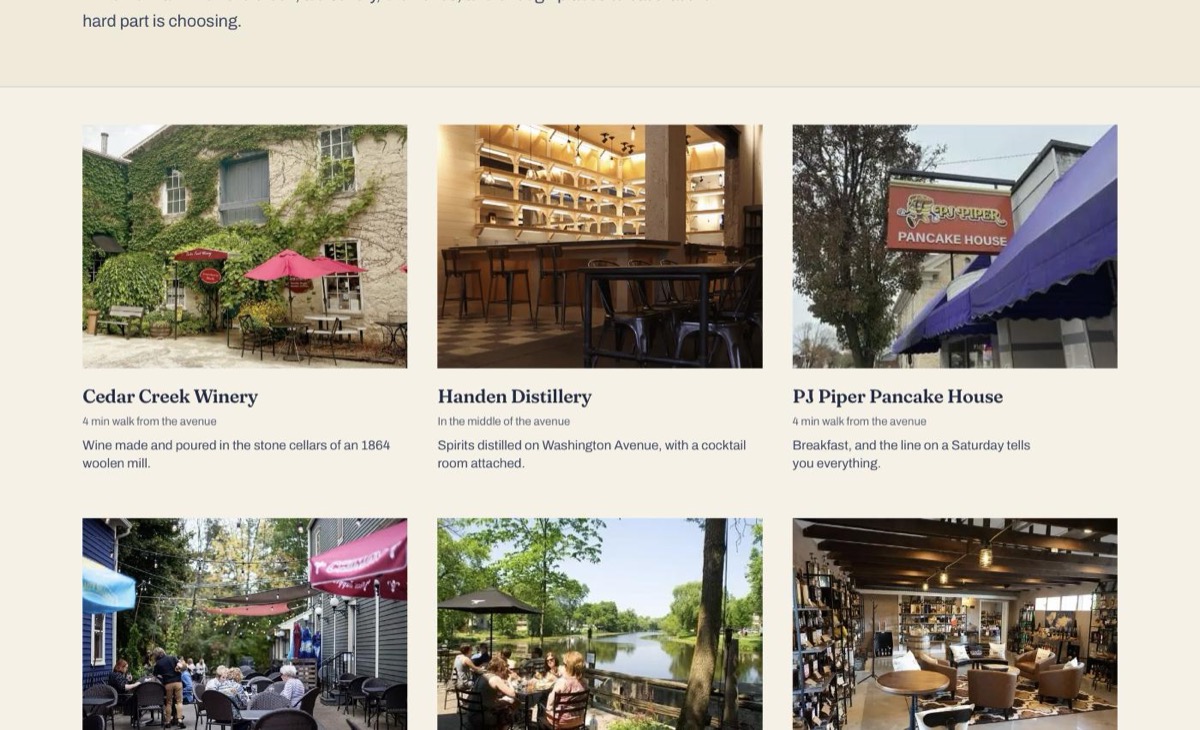
places— every physical thing a visitor goes to, with category, subcategories, hours, coordinates, photos, and a sort weightevents— including a recurrence rule, because festivals and markets repeat and a tourism calendar that cannot express that is not finishedstories— editorial and itineraries in one table split by kind, wherestops_jsonholds ordered place references with a note at each stop. That one field is what makes a walkable loop work rather than being a blog post with a map stuck underneath.
Visitor-facing categories, not the Chamber’s internal taxonomy. The existing membership system organizes businesses the way a chamber thinks about dues. A visitor is looking for live music, food and drink, or something to do with children. The taxonomy mapping between the two was one of the real pieces of work.
What it demonstrates
Research into the existing data sources, a content model designed around how visitors actually search, and a running site — produced inside a bid window. Whether or not it is awarded, it is a fair sample of how a greenfield build gets approached.
Something similar on your side?
Thirty minutes, no deck. Tell me what's going on and I'll give you a straight read on it.
Book a working session